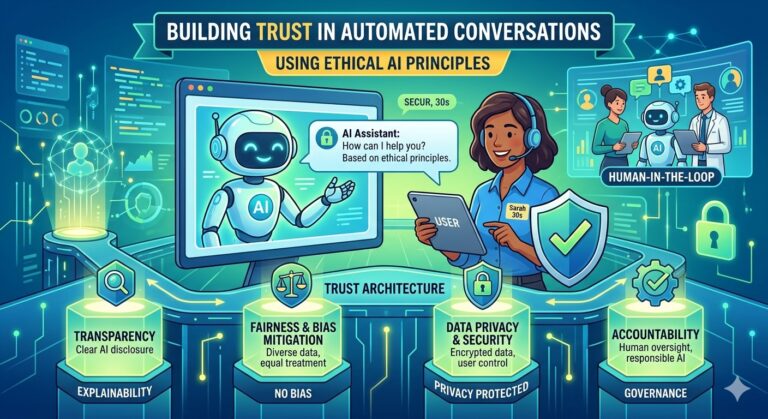
Building Trust in Automated Conversations using Ethical AI
Artificial intelligence is quickly changing how companies interact with their clients. Businesses are utilizing intelligent technology, such as AI chatbots and automated message systems, to deliver quicker and more effective client interactions.
But as AI-powered communication proliferates, companies also need to address a crucial issue: trust and ethics. Consumers want to know that the systems they use are accountable, transparent, and equitable.
At this point, ethical AI becomes crucial. Automated interactions are created with user privacy, bias avoidance, and transparency in mind thanks to ethical AI.
Ethical AI: What Is It?
The creation and application of artificial intelligence systems in accordance with responsible values including justice, accountability, transparency, and privacy protection is known as ethical AI.
When applied to automated conversations, ethical AI ensures that communication tools behave responsibly and provide accurate, unbiased, and trustworthy responses.
Ethical AI practices focus on:
- Protecting customer data and privacy
- Preventing algorithmic bias
- Ensuring transparency in automated responses
- Maintaining accountability for AI decisions
By implementing these principles, businesses can create AI systems that customers trust.
Why Ethical AI Matters in Customer Communication
AI-powered communication tools often interact directly with customers. These interactions influence how people perceive a brand and whether they feel comfortable sharing information with a company.
If AI systems behave unfairly, misuse data, or provide misleading responses, they can damage customer trust and harm a company’s reputation.
Ethical AI helps businesses:
- Build stronger customer relationships
- Protect brand credibility
- Ensure responsible use of technology
- Comply with data privacy regulations
Companies that prioritize ethical AI are more likely to earn customer loyalty and long-term trust.
Transparency in AI Conversations
One of the most important principles of ethical AI is transparency. Customers should clearly understand when they are interacting with an AI system rather than a human representative.
Businesses can build transparency by:
- Informing users when conversations are automated
- Explaining how AI systems use customer data
- Providing clear information about AI capabilities and limitations
When customers understand how AI systems work, they are more likely to trust automated interactions.
Protecting Customer Privacy and Data
AI-powered communication systems often collect and analyze customer data to improve responses and personalize interactions. While this data is valuable, it must be handled responsibly.
Ethical AI systems should prioritize:
- Secure data storage
- Responsible data collection
- Limited data usage
- Compliance with privacy regulations
Businesses should only collect the information necessary to provide services and must protect it from unauthorized access.
Avoiding Bias in AI Systems
AI systems learn from large datasets, and if those datasets contain biases, the AI may unintentionally produce unfair or discriminatory responses.
For example, biased algorithms could affect customer recommendations, hiring processes, or customer support decisions.
To prevent bias, organizations should:
- Use diverse and representative datasets
- Continuously monitor AI performance
- Conduct regular algorithm audits
- Improve training data when issues are detected
These steps help ensure AI systems treat all users fairly.
Maintaining Human Oversight
Even advanced AI systems should not operate without human supervision. Ethical AI involves maintaining human oversight to ensure automated systems behave appropriately.
Human teams should:
- Monitor AI-generated responses
- Review complex customer interactions
- Intervene when AI systems encounter unusual situations
This combination of automation and human oversight ensures both efficiency and responsible communication.
Building Customer Confidence Through Responsible AI
Trust is one of the most valuable assets for any business. When customers feel confident that AI systems are ethical and responsible, they are more likely to engage with automated services.
Businesses can build trust by:
- Clearly communicating AI policies
- Offering customers the option to speak with a human agent
- Regularly updating AI systems to improve accuracy
- Maintaining strong data security practices
Responsible AI adoption strengthens relationships between companies and their customers.
The Role of AI Communication Platforms
Modern AI communication platforms help businesses implement automated conversations while maintaining ethical standards.
Platforms like SmileLineAI allow businesses to create intelligent customer communication systems that balance automation with transparency and responsible data practices.
By using reliable AI platforms, companies can improve customer engagement while maintaining ethical communication standards.
Preparing for the Future of Ethical AI
As AI continues to evolve, ethical considerations will become even more important. Governments, technology companies, and businesses are increasingly developing guidelines and regulations to ensure responsible AI usage.
Organizations that prioritize ethical AI today will be better prepared for future standards and expectations.
Implementing ethical AI practices is not just about compliance—it is about building long-term trust with customers and creating a responsible digital ecosystem.
Final Thoughts
Artificial intelligence offers powerful opportunities to improve customer communication, but it must be implemented responsibly. Ethical AI ensures that automated conversations remain transparent, fair, and respectful of customer privacy.
Businesses that adopt ethical AI practices can strengthen trust, protect their reputation, and deliver better customer experiences.
As automated communication becomes more common, ethical AI will play a crucial role in shaping the future of business interactions. Companies that prioritize responsibility and transparency will lead the way in building trustworthy AI-driven communication systems.